How to Treat Cedar Against Mould, Algae and Blue Stain in Damp UK Climates
Cedar earns its reputation. Western red cedar shrugs off rain, resists rot in the heartwood and silvers down to a soft grey that most of us quietly like. But resistant is not immune, and a wet British winter will leave its mark: a green film creeping across a shaded fence panel, black speckling along a north-facing cladding board, or the grey-blue bruising of blue stain in the sapwood.
Those three problems look similar in a photo and behave very differently on the wood. Mould and algae sit on the surface and wash away. Blue stain lives inside the timber, and no amount of scrubbing will shift it. Knowing which one you have decides whether you need a bucket and an afternoon, or a different plan entirely.
Identify the problem before you buy anything
Mould
Black, grey or greenish patches, often powdery or sooty. Rub it with a thumb and it smears. It favours still, damp air: behind planters, under a bench seat, along the bottom rail of a fence where grass grows against the boards.
Algae
A green film that can turn slippery in the wet. It appears on the face that never dries — north and east elevations, boards under tree cover, anything near a dripping downpipe or a leaking gutter. On decking it is the main reason people slip in November.
Blue stain
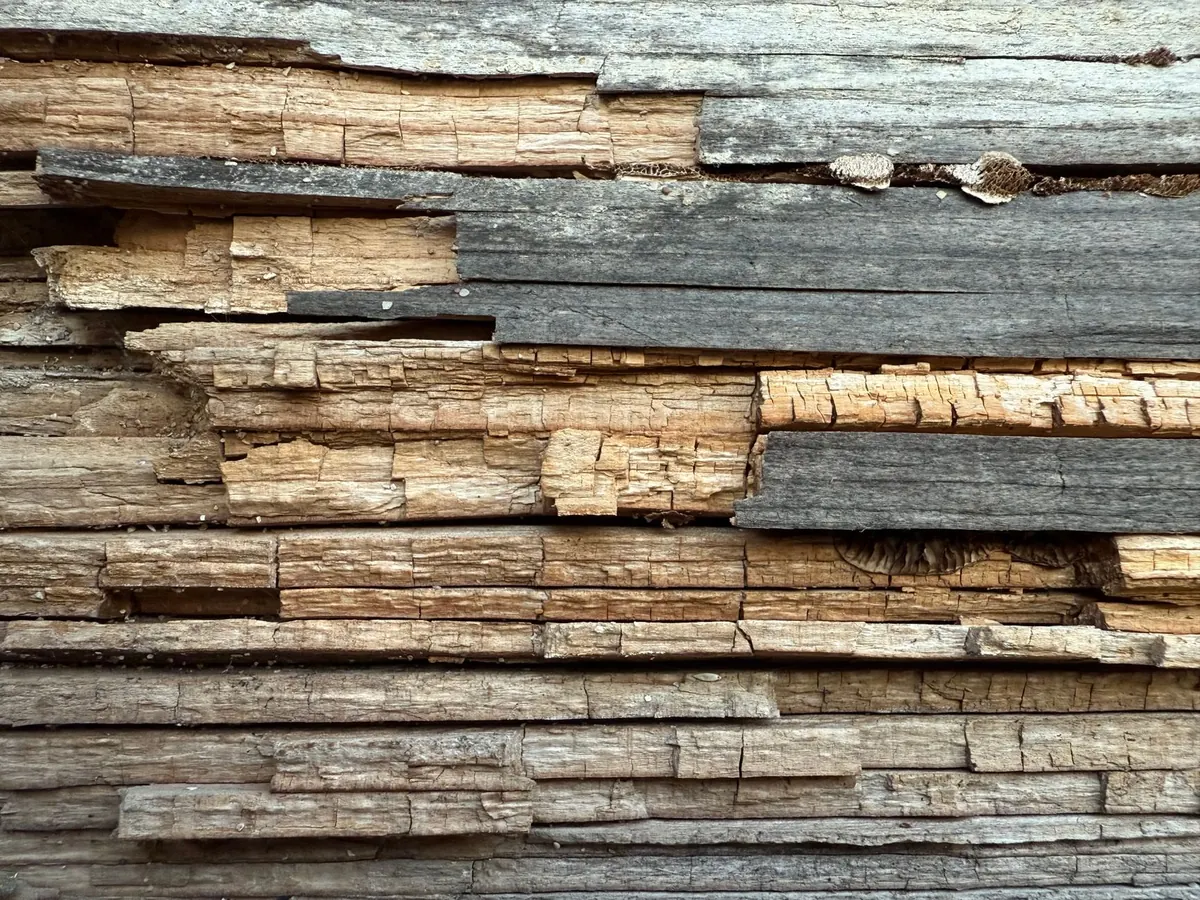
Grey, blue-black or charcoal streaks that follow the grain, usually at board edges or where water sits. The wood still feels firm. Press a fingernail or a screwdriver tip into it: if the timber gives, crumbles or feels spongy, you are looking at decay rather than stain, and that board probably needs replacing.
Blue stain itself does not weaken cedar. It is a fungus feeding on the starches in the sapwood, and it stops once the wood dries. What it tells you is that moisture has been sitting somewhere it should not.
Why cedar struggles in a UK climate
Cedar heartwood is naturally durable. Sapwood is not, and plenty of fencing, cladding and decking on sale contains a fair amount of it. Add driving south-westerly rain, weeks of high humidity that never quite dry the surface, and a garden that puts a fence panel permanently in shade, and you have ideal growing conditions for surface organisms.
The shape of the structure matters as much as the weather. Close-boarded panels with no airflow, cladding fixed tight to a wall, soil piled against a gate post, planters standing directly on decking boards — these all trap water against the timber and keep it there.
Fix the water before you treat the wood
Any finish applied over damp timber will fail within a season. So start with the source. Clear the gutters. Cut shrubs back so they are not touching the boards. Lift planters onto feet. Move firewood away from the fence. If a post sits in soil, consider replacing it with a concrete spur or a shoe. You do not need a perfect detail, just enough airflow and drainage that the surface can dry between showers.
Treat the water first, the wood second. A new finish over a damp board is money spent twice.
Cleaning cedar safely, step by step
- Pick a dry, mild day with a day or two of dry weather behind it and a couple more forecast.
- Brush off loose growth with a stiff hand brush, working along the grain. Never use a wire brush — it scratches the soft earlywood.
- For light mould, warm water and a little mild detergent is usually enough. Work in sections and rinse as you go.
- For algae and heavier growth, use a proprietary wood cleaner or a diluted oxygen bleach solution. Avoid neat household bleach: it lightens cedar unevenly, raises the grain and can leave pale blotches. If you do use a chlorine-based product, wet the wood first, keep run-off away from borders and ponds, and rinse thoroughly.
- If you pressure wash, keep it gentle. A wide fan tip, at least 300mm from the surface, moving along the grain, and never linger in one spot. Cedar's soft earlywood erodes fast and leaves a ridged, furry surface you cannot put back.
- Rinse, then let the timber dry for several days before applying anything else.
Wear gloves and eye protection, follow the label on whatever you use, and never mix bleach with ammonia-based cleaners. Keep run-off away from ponds, vegetable beds and pets.
What to do about blue stain
Blue stain is pigment inside the wood, so cleaning will not remove it. Sanding can lighten shallow staining in sapwood, but it rarely erases it completely and you risk flattening the grain.
You have three realistic options. Live with it — many people do, and it weathers into the general grey. Replace the affected boards with a better grade, ideally clear heartwood, and fix the moisture problem that caused it. Or hide it with a semi-opaque or opaque pigmented finish, which masks staining far better than a clear oil ever will. If the affected board is structural, or if you find soft timber behind the stain, treat it as decay and take advice before simply coating it.
Choosing and applying a finish
Decide what you want first. Left untreated, cedar weathers to silver-grey. It still grows algae and mould in damp shade, so you will need to clean it every couple of years, but it is a legitimate choice.
If you want to hold the colour, use a penetrating oil or a pigmented stain with UV protection. Avoid high-build varnish and other film-forming finishes; cedar moves with the seasons and the film cracks, letting water in behind it.
- Apply two thin coats rather than one thick one.
- Back-brush or wipe along the grain to even it out and avoid puddles.
- Pay extra attention to end grain, which drinks finish.
- Work in the shade or on a cloudy day — direct sun makes the finish dry too fast.
- Wait for temperatures above about 10°C and dry wood. Damp timber repels oil.
- Check exposed faces every 18 months and touch in bare patches before they spread.
A simple yearly routine
Walk the fence, shed and cladding in spring. Look at north-facing surfaces and anywhere a downpipe, planter or shrub keeps things damp. Clean light growth before it becomes a mat, because a thin film comes off with a brush and a bucket while a thick one needs chemicals. Clear gutters, pull vegetation back, and check whether the finish is thinning on the sunniest and wettest faces. Twenty minutes twice a year saves a weekend later.
When to get help
Call in a timber specialist if posts have gone soft at the base, if a whole elevation is affected, or if the structure carries weight. For listed buildings, conservation areas and anything with a planning condition attached, check with your local planning authority before changing the appearance of the timber. And if you are unsure whether you are looking at stain or rot, ask someone who can put a knife into it — that answer is worth more than any photograph.
Photo: Edyta Le / Pexels
Cedar Shingles vs. Cedar Shakes: Which Roof or Wall Covering Should You Choose?
Sawn shingles and split shakes both come from western red cedar, but they differ in cut, thickness, look...

Woodworking with Cedar: Projects, Joinery and Finishing Tips for Beginners
A practical beginner's guide to working with cedar: what makes it different, projects worth building,...
About Us